





Discover why Dunkin Brands stock no longer trades publicly after the 2020 Inspire Brands acquisition.
Learn about the $11 billion deal, what shareholders received, and the best alternative restaurant stock investments available today.
Contents
- What Happened To Dunkin Brands Stock?
- The $11 Billion Inspire Brands Acquisition Explained
- Why Inspire Brands Took Dunkin Private
- What Shareholders Received in the Deal
- Dunkin Brands Revenue Performance Before Acquisition
- How To Invest In Dunkin Brands Today
- Best Alternative Restaurant Stock Investments
- Trading Options On Restaurant Stocks
- What Was Dunkin Brands Stock Price In 2020?
- Will Dunkin Brands Ever Go Public Again?
- FAQs About Dunkin Brands Stock
- Conclusion: A Successful Exit For Public Shareholders
What Happened To Dunkin Brands Stock?
Dunkin Brands is no longer publicly traded.
On December 15, 2020, Inspire Brands completed an $11 billion acquisition that took Dunkin Brands private, removing it from all stock exchanges.
Today, we are looking at Dunkin Brands stock and answering the question: what happened to this once-popular public company?
The Quick Answer:
Delisted: December 15, 2020
Acquirer: Inspire Brands (privately held)
Deal Value: $11 billion
Shareholder Payout: $106.50 per share
Current Status: Private subsidiary of Inspire Brands
Can You Buy It? No – not available on any stock exchange
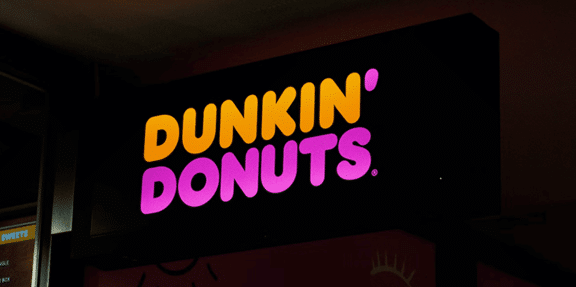
Dunkin Brands was famous for several of its retail brands, including Dunkin’ Donuts and Baskin Robbins Ice Cream.
The company was founded in 1950 and was headquartered in Massachusetts.
For nearly a decade (2011-2020), Dunkin Brands was a popular investment choice for traders seeking exposure to the quick-service restaurant sector.
However, the company’s successful run as a publicly-traded entity came to an end when Inspire Brands made an offer too good to refuse.
The $11 Billion Inspire Brands Acquisition Explained
The story of how Dunkin Brands went from public to private is a masterclass in strategic acquisitions within the restaurant industry.
Timeline of the Acquisition:
Initial Announcement: Inspire Brands initially valued Dunkin Brands at approximately $8 billion when they first approached the company about a potential acquisition.
Negotiation Phase: After extensive negotiations and due diligence, the final valuation jumped to over $11 billion – a premium that reflected:
Strong brand portfolio (Dunkin’ Donuts, Baskin Robbins)
Extensive franchise network
Consistent revenue growth
Strategic value to Inspire’s portfolio
Deal Completion: On December 15, 2020, Inspire Brands officially completed the acquisition, purchasing all outstanding shares at $106.50 per share.
Immediate Effect: On December 16, 2020, Dunkin Brands stock was no longer available to buy or sell on any stock exchange.
All existing shares were converted to cash at the agreed-upon price.
What Inspire Brands Acquired:
The $11 billion deal included:
Dunkin’ Donuts: The flagship coffee and donut chain
Baskin Robbins: Premium ice cream brand
Thousands of franchise locations worldwide
Established supply chains and operational systems
Strong brand recognition and customer loyalty
Why Inspire Brands Took Dunkin Private
Inspire Brands is itself a privately held company, which meant that any company it acquired would also become private.
Strategic Rationale:
Portfolio Expansion
Inspire Brands built a powerful restaurant empire including:
- Arby’s
- Jimmy John’s
- Sonic Drive-In
- Buffalo Wild Wings
- And now, Dunkin’ Donuts and Baskin Robbins
Operational Synergies
Private ownership allows Inspire to:
- Make long-term strategic decisions without quarterly earnings pressure
- Integrate operations across brands
- Leverage purchasing power across the portfolio
- Implement changes without public market scrutiny
Growth Without Public Market Constraints
As a private entity, Dunkin Brands can:
- Focus on long-term growth over short-term earnings
- Invest heavily in technology and infrastructure
- Experiment with new concepts without stock price reactions
- Avoid the costs and regulatory burden of being public
The Parent Company Advantage:
Since becoming part of Inspire Brands, Dunkin has benefited from:
- Access to greater capital resources
- Shared best practices across multiple restaurant brands
- Enhanced negotiating power with suppliers
- Coordinated marketing and technology initiatives
During the 2021 calendar year, Inspire Brands generated more than $30 billion in gross revenue from all sources, demonstrating the power of their multi-brand strategy.
Access Options Trading Education
While you can’t trade Dunkin Brands stock anymore, you can trade options on publicly-traded restaurant stocks:
View Our Free Options Trading Resources – Learn how to generate income from stocks like Starbucks, McDonald’s, and Yum! Brands.
What Shareholders Received In The Deal
If you owned Dunkin Brands stock in 2020, here’s exactly what happened:
The Buyout Terms:
Cash Payment: $106.50 per share
This represented a significant premium over the pre-announcement trading price
Shareholders received cash, not stock in Inspire Brands
The payment was automatic – no action required by shareholders
Tax Implications:
The forced sale created a taxable event for shareholders
Capital gains taxes applied based on purchase price
Shareholders in tax-advantaged accounts (IRA, 401k) avoided immediate taxes
No Ongoing Ownership: Unlike some acquisitions where shareholders can elect to receive acquirer stock, this was a 100% cash deal.
Former Dunkin Brands shareholders have no ownership stake in the private Inspire Brands.
Dunkin Brands Revenue Performance Before Acquisition
Understanding Dunkin Brands’ financial performance helps explain why Inspire was willing to pay $11 billion.
Revenue Growth Trajectory:
2019 Performance: Dunkin Brands generated more than $1 billion in gross revenue during the 2019 financial year, representing remarkable growth compared to a decade earlier.
Five-Year Growth Story: Between 2010 and 2019, Dunkin Brands nearly tripled its annual gross revenue as:
- Economic conditions improved post-financial crisis
- Coffee consumption continued rising
- Brand modernization attracted new customers
- Franchise expansion accelerated
Consistent Performance: The projections for 2020-2022 were in line with expectations from the previous five years, showing:
- Stable same-store sales growth
- Successful new product launches
- Strong franchise economics
- Resilient business model
Why the Numbers Mattered:
Some investors had hoped that Dunkin Brands would remain public due to the bright future the brand had ahead.
The strong revenue trajectory and proven business model made it an attractive acquisition target.
The initial $8 billion valuation grew to over $11 billion as Inspire recognized:
- Future revenue potential
- Brand strength and customer loyalty
- Valuable real estate and franchise relationships
- Synergies with their existing portfolio
How To Invest In Dunkin Brands Today
As of December 2020, there is no longer a Dunkin Brands stock symbol on any stock exchange.
Current Investment Options:
Direct Investment: Impossible
- Inspire Brands (parent company) is privately held
- No shares available to public investors
- No over-the-counter (OTC) trading available
- Cannot buy Dunkin Brands stock in any form
Indirect Investment: Not Available
Unlike some private company acquisitions, there’s no practical way to gain indirect exposure to Dunkin Brands specifically because:
- Inspire Brands doesn’t trade publicly
- Inspire has no announced plans for an IPO
- Dunkin represents only a portion of Inspire’s portfolio
Alternative Strategies:
Since direct investment is impossible, investors seeking exposure to the quick-service restaurant and coffee shop sectors have several alternatives:
Strategy 1: Invest in Competitor Stocks Companies like Starbucks, McDonald’s, and Yum! Brands offer direct exposure to similar consumer trends.
Strategy 2: Trade Options on Restaurant Stocks For more sophisticated investors, selling put options on quality restaurant stocks allows you to potentially acquire shares at a discount while generating income.
Strategy 3: Restaurant Industry ETFs Exchange-traded funds focusing on consumer discretionary or restaurant sectors provide diversified exposure.
Strategy 4: The Wheel Strategy on Restaurant Stocks The wheel strategy combines cash-secured puts and covered calls on quality restaurant stocks for systematic income generation.
Best Alternative Restaurant Stock Investments
The demand for quick-service restaurants, coffee, and snack foods has never been higher.
Here are the best publicly-traded alternatives to Dunkin Brands:
Starbucks (SBUX)
Almost anyone who has spent time in a major city has likely stumbled across a Starbucks Coffee shop.
Key Starbucks Metrics:
Founded: 1971
Headquarters: Seattle, Washington
Locations: 33,000+ worldwide (about half in the U.S.)
Employees: 400,000+
EPS: $1.63 (fiscal year ended Sep. 28, 2025)
Stock Symbol: SBUX (NASDAQ)
Investment Characteristics:
Market Leader: Dominates premium coffee segment
Global Presence: Strong international growth
Innovation: Mobile ordering, rewards program
Options Liquidity: Excellent for trading strategies
Current Opportunity: Like many stocks, Starbucks has experienced volatility during recent market downturns.
Some investors see value in purchasing quality businesses during temporary price declines.
Starbucks’ consistent cash flow and dividend make it excellent for options income strategies, including covered calls and cash-secured puts.

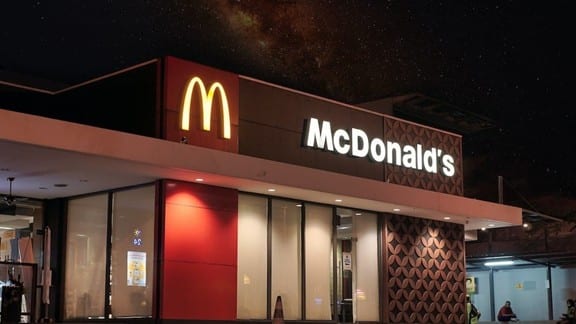
McDonald’s (MCD)
McDonald’s was founded in 1955 in California and dominates the global fast-food industry.
Key McDonald’s Metrics:
Founded: 1955
Headquarters: Chicago, Illinois
Employees: 200,000+ (corporate and franchises)
EPS: $11.72 (fiscal year ended Sep. 30, 2025)
Stock Symbol: MCD (NYSE)
Dividend: Strong, consistent dividend aristocrat
Investment Characteristics:
Stability: Defensive stock during economic uncertainty
Global Scale: Operating in 100+ countries
Franchise Model: Capital-light, high-margin business
Consistent Performance: Less volatile than growth stocks
Why Investors Love McDonald’s: Unlike many restaurant stocks that plunged during recent market volatility, McDonald’s has remained relatively stable.
The company’s stock has historically shown resilience during economic downturns.
Some investors appreciate McDonald’s long-lasting reputation for being both stable and profitable, making it an anchor holding in many portfolios.
Yum! Brands (YUM)
Yum!
Brands appeals to investors due to its wide collection of well-known subsidiaries.
Key Yum! Brands Metrics:
Famous Brands: Pizza Hut, Taco Bell, KFC (Kentucky Fried Chicken)
Locations: 50,000+ worldwide
EPS: $5.18 (fiscal year ended Sep. 30, 2025)
Stock Symbol: YUM (NYSE)
Business Model: Primarily franchise-based
Investment Characteristics:
Diversification: Three major brands reduce single-concept risk
International Exposure: Particularly strong in China
Asset-Light Model: Franchise-heavy approach
Growth Potential: Expanding in emerging markets
Market Performance: Yum! Brands stock has shown moderate volatility, experiencing typical restaurant sector fluctuations.
The diversification across three distinct concepts (pizza, tacos, chicken) provides some stability compared to single-brand companies.
Trading Options On Restaurant Stocks
One advantage of investing in publicly-traded restaurant companies is the ability to use options strategies to enhance returns and manage risk.
Popular Options Strategies for Restaurant Stocks:
Covered Calls on Starbucks Starbucks’ moderate volatility and dividend make it ideal for covered call strategies. Investors can generate 1-2% monthly income on their SBUX positions while maintaining ownership.
Cash-Secured Puts for Entry Use cash-secured puts to enter positions in McDonald’s or Yum! Brands at prices below current market value while collecting premium income.
The Wheel Strategy The wheel strategy works exceptionally well on stable restaurant stocks, creating a systematic approach to income generation through both puts and calls.
Iron Condors During Earnings When restaurant stocks trade in predictable ranges between earnings, iron condors allow you to profit from time decay while maintaining defined risk.
Bull Put Spreads on Dips During temporary market selloffs, bull put spreads on quality restaurant stocks provide attractive risk-reward ratios with limited capital requirements.
Why Restaurant Stocks Work Well for Options:
Moderate Volatility: Not too high, not too low – ideal for selling premium
Brand Stability: Established companies reduce catastrophic risk
Dividend Support: Many restaurant stocks pay dividends, providing downside support
Options Liquidity: Major restaurant stocks have active options markets
Master Options Trading on Restaurant Stocks
Learn systematic approaches to generating income from quality stocks like Starbucks, McDonald’s, and Yum! Brands:
Options Income Mastery: Master the fundamentals of selling options on blue-chip stocks, including major restaurant chains. Learn systematic approaches to generating monthly income ($397)
The Accelerator Program: Advanced strategies for building a complete options portfolio across multiple sectors, including consumer discretionary and restaurant stocks. Includes live trading examples ($997)
Both programs teach you how to analyze stocks fundamentally and technically while implementing proven options strategies for consistent returns.
What Was Dunkin Brands Stock Price In 2020?
Does Dunkin Brands have a stock price today?
No – since Dunkin Brands was acquired in December 2020, it is no longer listed on the stock market.
Final Trading Details:
Last Trading Day: December 15, 2020
Final Acquisition Price: $106.50 per share
All Shares Purchased: 100% cash buyout
Current Price: N/A (not publicly traded)
Historical Context:
Before Announcement: Dunkin Brands stock traded in the $70-80 range before the acquisition was announced, meaning shareholders received a significant premium.
Premium Paid: The $106.50 acquisition price represented approximately a 30-35% premium over pre-announcement levels, rewarding long-term shareholders handsomely.
Deal Value Breakdown:
Initial valuation: ~$8 billion
Final deal value: ~$11 billion
Premium paid reflects: brand value, growth potential, strategic synergies
What Happened to Options Contracts:
When Dunkin Brands was acquired, all outstanding options contracts were adjusted to reflect the $106.50 cash payment.
Options traders received cash settlement rather than shares, and all contracts expired after the deal closed.
Will Dunkin Brands Ever Go Public Again?
There is not a very significant chance that Dunkin Brands will go public again in the near future.
Why Dunkin Likely Stays Private:
Inspire’s Business Model
Inspire Brands operates as a privately-held restaurant empire. Taking individual brands public would:
- Complicate the corporate structure
- Create competing interests between brands
- Reduce operational flexibility
- Increase regulatory costs
No Strategic Benefit
Inspire already has:
- Access to capital through private equity backing
- Freedom to make long-term decisions
- Ability to leverage assets across brands
- No need for public market capital
Industry Trend
The restaurant industry has seen more take-privates than IPOs in recent years, as private equity firms recognize the value of:
- Long-term operational improvements
- Avoiding quarterly earnings pressure
- Strategic flexibility
What Would Need to Change:
For Dunkin Brands to go public again, we’d likely need:
- A complete change in Inspire Brands’ ownership strategy
- Separation of Dunkin from the Inspire portfolio
- A decision that public markets offer better value than private ownership
- None of these seem likely in the foreseeable future.
FAQs About Dunkin Brands Stock
Can I buy Dunkin Brands stock?
No, you cannot buy Dunkin Brands stock.
The company was taken private by Inspire Brands in December 2020 for $11 billion and is no longer listed on any stock exchange.
Inspire Brands is also privately held, meaning there’s no indirect way to invest in Dunkin Brands either.
Who owns Dunkin Brands now?
Dunkin Brands is owned by Inspire Brands, a privately-held restaurant company that also owns Arby’s, Jimmy John’s, Sonic Drive-In, and Buffalo Wild Wings.
Inspire Brands itself is backed by private equity but does not trade publicly.
What happened to Dunkin Brands shareholders?
Dunkin Brands shareholders received $106.50 per share in cash when the acquisition closed on December 15, 2020.
This represented a significant premium over the pre-announcement stock price.
Shareholders no longer have any ownership in Dunkin Brands or Inspire Brands.
Why did Dunkin Brands go private?
Dunkin Brands went private because Inspire Brands (a privately-held company) acquired it for $11 billion.
Inspire saw strategic value in adding Dunkin’ Donuts and Baskin Robbins to their restaurant portfolio.
As a private subsidiary, Dunkin can focus on long-term growth without public market pressures.
What is Dunkin Brands revenue now?
While specific Dunkin Brands revenue figures are no longer publicly disclosed, the company generated over $1 billion annually before the acquisition.
As part of Inspire Brands, it contributes to the parent company’s $30+ billion in total revenue across all brands.
What are the best alternatives to Dunkin Brands stock?
The best publicly-traded alternatives for investors seeking exposure to the coffee shop and quick-service restaurant sectors include:
- Starbucks (SBUX) – Premium coffee leader
- McDonald’s (MCD) – Global fast-food giant
- Yum! Brands (YUM) – Pizza Hut, Taco Bell, KFC
- Restaurant Brands International (QSR) – Burger King, Tim Hortons, Popeyes
- Consumer discretionary ETFs with restaurant exposure
Can I trade options on Dunkin Brands?
No, you cannot trade options on Dunkin Brands because the company is no longer publicly traded.
However, you can trade options on alternative restaurant stocks like Starbucks (SBUX), McDonald’s (MCD), and Yum! Brands (YUM), which offer excellent liquidity for various options strategies.
Will Inspire Brands ever go public?
While possible, there are currently no indications that Inspire Brands plans an initial public offering (IPO).
Private ownership provides strategic advantages including operational flexibility, long-term focus, and freedom from quarterly earnings pressure.
Most private equity-backed restaurant companies prefer to remain private or pursue strategic sales rather than IPOs.
Conclusion: A Successful Exit For Public Shareholders
Dunkin Brands has been famous within the United States for more than seven decades.
After being founded in 1950, the company built iconic brands including Dunkin’ Donuts and Baskin Robbins that became deeply embedded in American culture.
The Story’s Ending:
With ice cream shops, donut shops, and coffee hubs, Dunkin managed to harness significant consumer demand before being acquired by Inspire Brands for $11 billion in 2020.
For Shareholders: The acquisition represented a successful exit with a healthy premium over pre-deal prices.
Investors who held Dunkin Brands stock received $106.50 per share in cash.
For the Company: While Dunkin Brands has a bright future as part of Inspire Brands’ portfolio, public investors won’t be able to join the company along for the journey.
For Traders: Inspire Brands boosted its own revenues by acquiring Dunkin, but traders cannot buy shares because Inspire is privately held and shows no signs of pursuing an IPO.
Key Takeaways:
Dunkin Brands is permanently off the market – acquired December 2020
$106.50 per share – what shareholders received in cash
Inspire Brands (private) – current owner with no public trading
No future IPO likely – strategic advantage to staying private
Strong alternatives exist – Starbucks, McDonald’s, Yum! Brands
Options strategies available – trade alternatives systematically
Long-term success – 70+ years of building beloved brands
Despite being acquired and delisted from the stock market, Dunkin Brands has thrived for more than 70 years since its 1950 founding.
As a subsidiary of Inspire Brands, the company will likely continue generating strong revenues and serving millions of customers daily, just without the scrutiny and reporting requirements of public markets.
For investors who still want exposure to the coffee shop and restaurant sectors, the alternatives listed above provide excellent opportunities, with the added benefit of being able to implement sophisticated options income strategies for enhanced returns.
Related Articles
Selling Put Options Strategy
The Wheel Strategy Explained
Best Iron Condor Strategy
Bull Put Spreads Guide
Weekly Option Strategies
We hope you enjoyed this comprehensive guide to what happened with Dunkin Brands stock.
If you have any questions, please send an email or leave a comment below.
Trade safe!
Disclaimer: The information above is for educational purposes only and should not be treated as investment advice. The strategy presented would not be suitable for investors who are not familiar with exchange traded options. Any readers interested in this strategy should do their own research and seek advice from a licensed financial adviser.