








Discover whether New Balance stock is publicly traded and learn how to invest in the athletic footwear industry.
Find out about New Balance’s revenue, ownership structure, and the best alternative investment opportunities in the footwear sector.
Contents
- Introduction to New Balance
- Is New Balance Publicly Traded?
- Will New Balance Ever Go Public?
- New Balance Revenue and Financial Performance
- How To Invest In New Balance (Alternative Strategies)
- Similar Investment Opportunities in Footwear Stocks
- Trading Options on Footwear Stocks
- What Would a New Balance Stock Price Be?
- Final Summary: New Balance Stock
- FAQs About New Balance Stock
Introduction to New Balance
Today, we are looking at New Balance Stock and answering the question, is it publicly traded?
Read on to learn more about New Balance.
New Balance is a well-known footwear manufacturing company that was established in 1906.
The company was founded in Boston, where it went on to become one of America’s top footwear manufacturing companies.
New Balance was founded back in 1906 and has been in operation for over 119 years as of 2025.
William Riley famously founded New Balance and evolved into an iconic American footwear brand.
Investors may be frustrated by the fact that New Balance is a privately-held company.
This means it is not currently possible to invest directly in New Balance’s footwear brand.
While New Balance is not currently listed on the stock market, it’s possible that the company could go public in the future.
The company is currently owned by James Davis, who also serves as the Chairman of New Balance.
Is New Balance Publicly Traded?
No, New Balance is not publicly traded.
New Balance remains a privately-held company owned by James Davis, who has shown no indication of taking the company public through an initial public offering (IPO).
This means:
-
-
- There is no New Balance stock ticker symbol
- You cannot buy New Balance shares on any stock exchange
- The company’s financial statements are not publicly available
- There are no quarterly earnings reports for investors to analyze
-
For investors interested in the athletic footwear sector, you’ll need to consider alternative investment strategies, which we’ll explore in detail below.
Will New Balance Ever Go Public?
It would be a significant step for New Balance to become a publicly traded company.
There are no current indicators that would suggest that New Balance would file an initial public offering.
This means there’s a very low chance that there would ever be a public stock for New Balance. If an initial public offering ever gets filed, it would likely come after a significant change in leadership.
Even still, there are no signs that James Davis is looking to sell his ownership in the New Balance company as of 2025.
New Balance isn’t the only competitive footwear brand in America, though.
The widely-contested footwear industry continues to see new brands and manufacturers enter the playing field.
The really intriguing part about New Balance is the impressive amount of gross revenue they have managed to generate annually.
This is one of the reasons why investors are so interested in acquiring public shares from New Balance if they ever become available.
Understanding how private companies eventually go public can help you identify future investment opportunities before they hit the market.
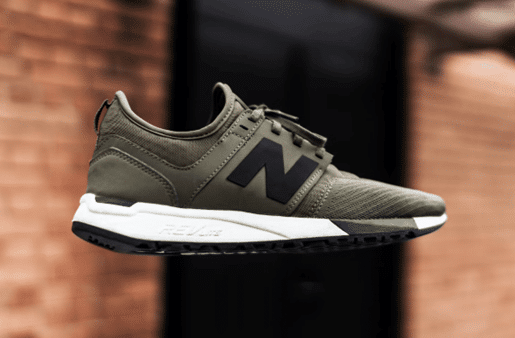
Access Our Best Options Trading Resources
Before you continue, get instant access to our most popular options trading guides and resources:
New Balance Revenue and Financial Performance
New Balance reported gross annual revenues in excess of $4.4 billion during the 2021 financial year.
This was a nice rebound in terms of revenue from drops in previous years.
New Balance reported revenue of $3.4 billion in 2020 and $4 billion in 2019.
The significant growth in the North American market is partially why gross sales continue to grow.
Recent Financial Highlights:
-
-
- 2024 Revenue: $7.8 billion (20% growth from 2023)
- 2023 Revenue: $6.5 billion (23% growth from 2022)
- 2022 Revenue: $5.3 billion (20% growth from 2021)
- 2021 Revenue: $4.4 billion (29% growth from 2020)
- 2020 Revenue: $3.4 billion (pandemic impact)
- 2019 Revenue: $4.0 billion
-
With revenues growing and the company steadily generating more revenue since the end of the global pandemic, the future seems bright.
Unfortunately, public traders cannot currently buy public shares for New Balance.
If New Balance can maintain its bounce back in terms of revenue, it would be very impressive.
Since New Balance has products selling in more than 100 countries around the globe, it has an international presence that many other footwear companies do not have.
New Balance has also been labeled one of the top ten footwear manufacturers in the entire world.
The company’s revenues and brand quality are two of the leading factors for this accomplishment.
How To Invest In New Balance (Alternative Strategies) {#how-to-invest}
As we’ve mentioned, there’s no New Balance stock symbol on any stock exchange.
However, savvy investors have several alternative strategies to gain exposure to the athletic footwear market:
Strategy 1: Invest in Competitor Stocks
The most direct approach is to buy shares in publicly-traded footwear competitors that operate in similar markets to New Balance.
Companies like Nike, Adidas, and Skechers offer exposure to the same consumer trends driving New Balance’s success.
Strategy 2: Trade Options on Footwear Stocks
For more sophisticated investors, selling put options on quality footwear stocks allows you to potentially acquire shares at a discount while generating income.
Alternatively, covered calls on footwear stocks can generate additional income on existing positions.
Strategy 3: Invest in ETFs with Footwear Exposure
Exchange-traded funds that focus on consumer discretionary stocks or retail sectors often include significant positions in footwear companies, providing diversified exposure to the industry.
Strategy 4: The Wheel Strategy on Footwear Stocks
The wheel strategy is an excellent approach for building positions in quality footwear stocks like Nike while generating consistent income through put and call options.
Key Facts About New Balance:
-
-
- James Davis serves as Chairman and currently owns New Balance
- Footwear products selling in more than 100 different countries
- Founded in 1906 and headquartered in Boston
- Over 5,500 employees in 2025
- No stock ticker symbol or public shares available
-
Investors should consider investing in similar footwear brands if they want exposure to the footwear sector of the market.
The younger generations are looking for stylish footwear brands to wear in their everyday lives.
The increased interest in modern-day footwear is part of why so many footwear brands are doing so well in recent years.
Let’s take a quick look at some of the best footwear brands investors could add to their portfolios.
Similar Investment Opportunities in Footwear Stocks
Some investors may be interested in a couple of alternative investment opportunities.
If you are looking for publicly-traded companies from the footwear industry, you could consider the following options.
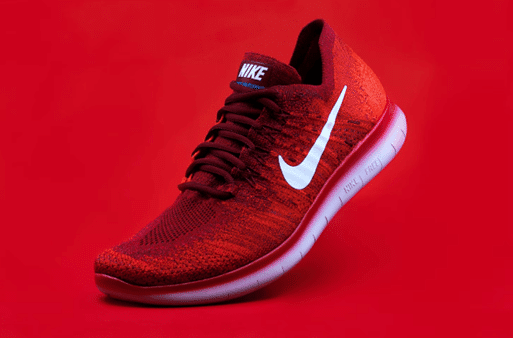
Nike (NKE)
Nike was founded in Oregon back in 1964. It has a large catalog of athletic footwear and casual footwear products.
Key Nike Metrics:
-
-
- Current Stock Price: $64 (as of Nov 2025)
- Previous Year Revenue: More than $51 billion
- Market Position: Global leader in athletic footwear
- Options Liquidity: Excellent for credit spreads and iron condors
-
Nike continues to be an iconic footwear choice globally.
The company’s strong brand recognition and consistent innovation make it a popular choice for both buy-and-hold investors and active options traders.
Nike’s high options volume makes it ideal for implementing systematic options strategies like covered calls and cash-secured puts.
Adidas (ADDYY)
Adidas was founded in 1924. It has worldwide influence because of its footwear and clothing brands.
Key Adidas Metrics:
-
-
- Employees: More than 60,000
- Revenue: More than €23.7 billion annually
- Trading Note: Available as ADR (American Depositary Receipt) in US markets
- Global Reach: Strong European and Asian market presence
-
Traders can purchase Adidas shares through American Depositary Receipts.
While options may be less liquid than Nike, Adidas represents strong international diversification for a footwear portfolio.

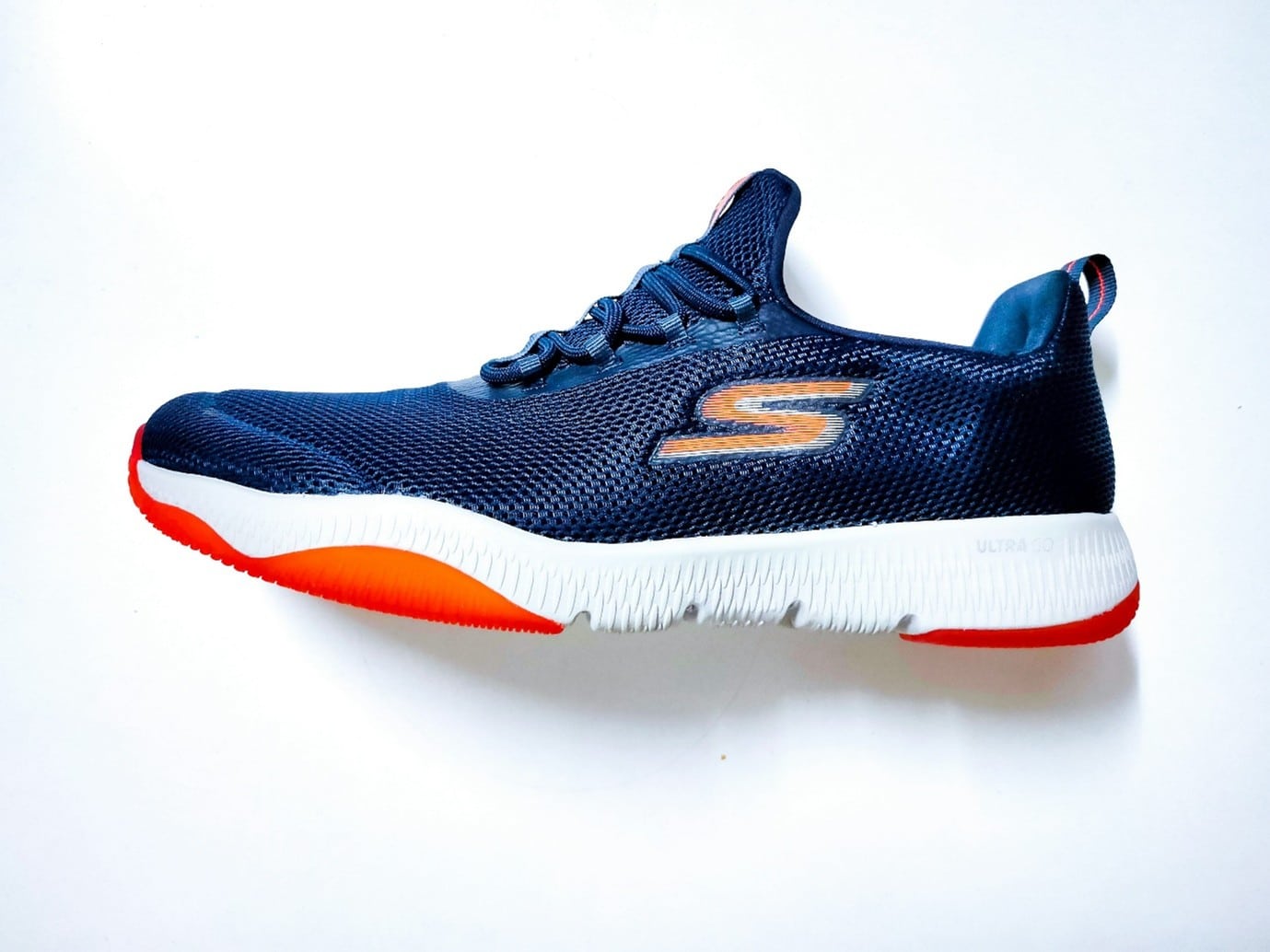
Skechers (SKX)
Skechers is another great company that was founded in the Southern California city of Manhattan Beach.
Key Skechers Metrics:
-
-
- Employees: More than 8,000 (2025)
- Revenue: Around $9 billion in gross revenue
- Anniversary: Celebrating over 30 years in business
- Stock: Acquired by 3G Capital and is now a private company
-
With more than 8,000 employees and $6 billion in gross revenue, it’s hard to complain about Skechers’ business model.
The company continues to be an iconic footwear company in the United States.
Ready to Master Options Trading on Stocks Like These?
Learning how to generate consistent income from quality stocks like Nike, Adidas, and Skechers can transform your investment approach. Our comprehensive courses teach you:
-
-
- Options Income Mastery: Master the fundamentals of selling options on blue-chip stocks, including the footwear giants. Learn systematic approaches to generating monthly income through puts and calls ($397)
- The Accelerator Program: Advanced strategies for building a complete options portfolio across multiple sectors, including consumer discretionary stocks. Includes live trading examples and ongoing support ($997)
-
Both programs teach you how to analyze stocks fundamentally and technically while implementing proven options strategies for consistent returns.
Trading Options on Footwear Stocks
One of the advantages of investing in publicly-traded footwear companies is the ability to use options strategies to enhance returns and manage risk.
Popular Options Strategies for Footwear Stocks:
Covered Calls on Nike Covered calls work exceptionally well on Nike stock due to its high options premium and liquidity. Investors can generate 1-3% monthly income on their Nike positions.
Cash-Secured Puts for Entry Use cash-secured puts to enter positions in Nike or Adidas at prices below current market value while collecting premium income.
The Wheel Strategy The wheel strategy combines cash-secured puts and covered calls on quality footwear stocks, creating a systematic approach to income generation.
Credit Spreads During Earnings Bull put spreads and bear call spreads can capitalize on earnings volatility in footwear stocks while maintaining defined risk.
Iron Condors for Range-Bound Markets When footwear stocks trade in a range, iron condors allow you to profit from time decay on both sides of the market.
Understanding options Greeks is essential when trading options on footwear stocks, as it helps you manage risk and optimize position sizing.
What Would a New Balance Stock Price Be?
Does New Balance have a stock price? Since New Balance isn’t a publicly-traded company listed on any stock exchange, there’s no direct stock quote for New Balance.
Estimating a Hypothetical New Balance Valuation:
If New Balance were to go public, we could estimate its potential market capitalization by comparing it to competitors:
Revenue-Based Comparison:
-
-
- New Balance Revenue: ~$7.8 billion
- Nike Revenue: ~$51 billion (Market Cap: ~$90-100 billion range)
- Nike Revenue Multiple: Approximately 4-5x revenue
- Hypothetical New Balance Market Cap: $31-37 billion (using similar multiple)
-
Stock Price Estimation: The actual stock price would depend on:
-
-
- Number of shares issued in the IPO
- Growth trajectory and profit margins
- Market conditions at time of IPO
- Valuation multiples in the consumer discretionary sector
-
For comparison, other footwear brands have their stocks trading at various price points:
-
-
- Nike: $60-65 per share range
- Adidas ADR: $90-110 per share range
-
The closest way to get a stock price for New Balance is to look at a rival company’s stock price.
However, some companies offer a different amount of shares, which impacts the per-share stock price significantly.
While many investors may be frustrated with the fact that New Balance is not a publicly-traded company, there is some good news: viable alternative footwear brands are suitable for a trader’s portfolio.
FAQs About New Balance Stock
Can I buy New Balance stock?
No, you cannot buy New Balance stock because the company is privately held.
New Balance has no stock ticker symbol and is not listed on any stock exchange.
The company is owned by Chairman James Davis with no current plans for an IPO.
Who owns New Balance?
New Balance is privately owned by James Davis, who serves as the company’s Chairman.
The Davis family has maintained private ownership with no indication of selling or taking the company public.
What is New Balance’s annual revenue?
New Balance generates approximately $7.8 billion in annual revenue (based on 2024 figures).
The company has shown strong revenue growth following pandemic-related declines, with a presence in over 100 countries worldwide.
What are the best alternatives to investing in New Balance?
The best alternatives for gaining exposure to the athletic footwear market include:
-
-
- Nike (NKE) – Market leader with excellent options liquidity
- Adidas (ADDYY) – International exposure through ADR
- Consumer discretionary ETFs with footwear exposure
-
Can I trade options on New Balance?
No, you cannot trade options on New Balance stock because the company is not publicly traded.
However, you can trade options on footwear competitors like Nike, Adidas, and Skechers, which offer excellent liquidity for various options strategies.
Will New Balance ever go public?
There are currently no indicators that New Balance plans to file for an IPO.
Any potential public offering would likely require a significant change in ownership or leadership structure, which is not anticipated in the near term.
How does New Balance compare to Nike financially?
While both are major footwear manufacturers, Nike is significantly larger with ~$51 billion in revenue compared to New Balance’s ~$7.8 billion.
Nike is publicly traded with a market capitalization exceeding $90 billion, while New Balance remains privately held.
Final Summary: New Balance Stock
New Balance will likely remain an iconic athletic footwear brand around the globe.
With partnerships across a variety of sports and activities, New Balance has managed to market itself as one of the major footwear brands in the industry.
With more than 119 years of experience, it’s hard to doubt the future success of a company like New Balance.
Revenues will likely continue growing for a company like New Balance, which means that future earnings could be very bright.
Key Takeaways:
1. No Public Stock Available: New Balance remains privately held with no IPO plans
2. Strong Financial Performance: $7.8+ billion in annual revenue with global reach
3. Quality Alternatives Exist: Nike and Adidas offer public market exposure
4. Options Strategies Available: Use covered calls, cash-secured puts, and the wheel strategy on competitor stocks
5. Long-Term Outlook: Private ownership likely to continue under Davis family
Sadly, investors may never be able to directly purchase New Balance shares.
Investors will have to settle for the opportunity to invest in other footwear brands instead.
Many years down the road, there could be a change in leadership that has an impact on the company’s values.
If new leadership eventually takes over, there could be a chance that New Balance could file an IPO.
It would be many years down the road if it were to happen.
There’s no guarantee that New Balance will ever sell leadership to someone that wants to bring the company public, though.
For now, focus on building a diversified portfolio that includes publicly-traded footwear stocks, and consider using systematic options strategies to enhance returns on these quality companies.
We hope you enjoyed this article on New Balance Stock.
If you have any questions, please send an email or leave a comment below.
Trade safe!
Disclaimer: The information above is for educational purposes only and should not be treated as investment advice. The strategy presented would not be suitable for investors who are not familiar with exchange traded options. Any readers interested in this strategy should do their own research and seek advice from a licensed financial adviser.